Inferior Practice or ‘Why pick on Trotsky?’

You probably won’t have spotted the bad pun in the title but it’s relevant – there’s theory and there’s practice (or praxis, if you’re a pedant). Leon Trotsky was outstanding at the first and, many would claim, just as great at the second but I’d object that there was a grave mismatch. Don’t worry, this isn’t going to involve a lot of marxist theory or terminology. I will explain one though, which might come up, and that’s ‘dialectics’. Initially it meant a logical discussion between people with opposing points of view. A German philosopher called Georg Hegel proposed a three-stage process – argument, counter-argument, resolution (thesis, antithesis, synthesis in his terminology). Marx and Engels borrowed this and twisted it to their own uses in order to explain changes in human history. I’d describe it as an attempt to base their theories in science – in this case Newton’s Third Law of Motion: action and reaction are equal and opposite. It’s a useful approach but shouldn’t be used obsessively ’cos we’re talking about human beings not billiard balls. That’s where bolsheviks like Trotsky went horribly wrong.

According to Marx and Engels, the dialectics of history meant that the oppressed and exploited working class (proletariat) would inevitably rise up and replace the ruling class (bourgeoisie) through ‘self-activity’. Class distinctions would then disappear and communism would bring prosperity and peace to the world. It’s a nice theory and still might happen but has nothing to do with what is perceived to be communism by its enemies, nor with what’s been done in its name. Trotsky played a major part in that degeneration.

I don’t disrespect him, Leon (Lev) Bronstein, who changed his name to Trotsky, was a real revolutionary, at least to begin with, and did time twice (1899 and 1906) for his activities even before the Revolution. He was also a great speaker and writer. I’ve read the first part of his ‘History of the Russian Revolution’ in translation and it’s an excellent, if obviously very partisan, account. Like many, his positions changed several times, starting with the Russian Social Democratic Labour Party in 1898 (note the name, friends in Labour and those supposed Social Democrats now with the Lib-Dems; it didn’t become the Communist Party until 1918). When the RSDLP split at the London Congress in 1903, he sided with the moderate minority (Menshevik) faction but tried to get the two parts to work together. He didn’t join the Bolsheviks until after the Revolution kicked off in March 1917 (note also that this was the real revolution; what happened in November – October in the old calendar – wasn’t a revolution but a coup d’état). He rose rapidly to the top. This is when theory and practice began to diverge.

Of course Marx and Engels hadn’t been too shy to contradict their own theories. Not content to let the inevitable march of history take its own course, they set up the International Workingmen’s Association (the 1st International) with the aim of steering it in the right direction. Soon enough they managed to throw out the anarchists by the simple expedient of moving the 1876 congress to New York, knowing the anarchists couldn’t afford the fare. So much for self-activity.

The bolsheviks weren’t slow to follow, beginning with the suppression of all the other revolutionary groups in Russia, not forgetting the anarchists, which Trotsky did not oppose. Trotsky began his revisions soon enough, firstly by putting trade unions under military control, so that strikes couldn’t happen, then by putting all the soviets (assemblies), that had formed amongst soldiers, sailors, workers and peasants in the early days of the revolution, under direct Bolshevik control. This was followed by the suppression of the soviets in the armed forces and the reinstatement of tsarist officers. The rationale (ie pitiful excuse) for this was the failure of German communists to effect a revolution after the fall of the Kaiser, thus contradicting Marx’s prediction that the working classes of the advanced economies in the West would rise first. Russia was the wrong place to start the revolution, so they’d have to busk it. This was how Marxist-Leninism was born. Consequently the civil war continued for 4-5 years more against the tsarist White Army and its allies, England and France, sending reluctant soldiers who’d just defeated the Germans to overthrow the revolution … and, of course, the anarchists in the Ukraine.

Then there was Kronstadt. If any Trot gives you the old line “You can’t make an omelette without breaking eggs”, resist the urge to break theirs and say “You can’t make an omelette unless the hens lay eggs.” That’s another thing the bolsheviks got wrong. It’s 1921 and the régime of ‘war communism’ drags on – the Red Army is winning and has just crushed the anarchist Black Army that helped them beat the tsarists, but workers’ rations and wages are still low and peasants are tired of having their produce ‘requisitioned’ without payment (ie stolen) to feed the Party and the army. Strikes break out in Petrograd (St Petersburg’s better name), birthplace of the revolution. The sailors and soldiers at the naval base of Kronstadt at the mouth of the Neva River come out in support. They produce a list of demands which includes, amongst other things, an end to one-party rule by the bolsheviks. As Commissar for War, Trotsky negotiates by sending in the army. In twelve days the revolutionaries are crushed, those who don’t die or escape to Finland are sent to the gulag. The leaders are executed or gaoled (much the same thing in those prisons). Lenin then recognised the justification of the rebels cause by ending war communism and allowing some liberalisation of the economy (the New Economic Policy). Trots will still defend this with old bolshevik conspiracy theories (lies) and omelette obscenities but those are the bare historical facts.

What’s my conclusion to all this? That Lev Trotsky began as a brave and genuine revolutionary but, when the bolsheviks took over the Russian people’s revolution in November 1917, he joined what he saw as the winning side and he then crushed the revolution … yes, he gets most of the credit. To my mind it was effectively over by 1919 when the unions and soviets were taken over completely by the bolsheviks and Trotsky was the person who headed that process. Kronstadt was the last gasp of independence. He remains a hero to many on the Left now because he tried to resist Stalin but he’d laid the table for Josip and the rest was inevitable. Did he deserve that icepick in the head in 1940? It was just cause and effect … or dialectics, if you like.

RA 2-4.8.17
Education makes you stupid ..

.. that’s its job. I’m not the first to make this observation but it probably confuses most people. ‘Surely,’ they think, ‘education makes you smart or makes smart people smarter ..’ That’s the sales pitch it comes with but the truth is more complicated. The simple answer is: it depends on who is providing it and who it’s designed for. One example comes is that, in Victorian Britain when primary school education was extended to all children, girls and boys were usually taught separately. The boys learned geography because they were expected in many cases to travel abroad in the service of the Empire. Girls often weren’t because it might worry their tender minds if they knew that a bigger world existed beyond the borders of their villages or towns.

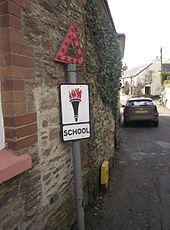
The word ‘education’ comes from Latin and originally meant ‘leading out’ – presumably from the darkness of ignorance into the light of knowledge. Indeed the road sign for a school used to be a flaming torch, signifying just that. However even a slight dip into the history of schooling shows that it was never that simple. Back in Classical-period Greece the great philosopher, Socrates, bemoaned the teaching of reading as undermining the ability of Athenian youths to use their memories. He might have been right but literacy extends what can be known so much that in the modern world it’s hard to survive without it. But, while wider learning was essential for the rulers and their advisors, for the majority of the population all they needed to learn were the skills of their trade. These latter were learned from your parents or your master, if you became an apprentice. Nowadays it’s called vocational training.
With the rise of Christianity and Islam, education became almost exclusively the domain of the clerics and they guarded their knowledge jealously. Thus in moslem countries the Koran is taught to most children by rote and only in Arabic; in christian lands under Catholic control, scriptures were all in Latin for centuries and anyone who tried to translate them into a modern language stood a good chance of getting burned alive. The Orthodox Church controls its scripture in other, but no less thorough, ways. As societies became more complex, it became more necessary to spread literacy and numeracy more widely in the population, but schools beyond the primary level remained by and large still in the hands of the clergy. This remained the case in England and Wales up to the 1870s and in fact there are still plenty of schools designated Church of England or Roman Catholic. In Ireland this lasted well into the 20th century. The purpose of these schools was to create firm believers and well-behaved, compliant citizens. In their alphabetically arranged ranks, children were taught literally to ‘know your place’, whether that was to be a leader or a follower. These ‘faith schools’ are seen by aspirational parents as the better choice for their children than the anarchy of state comprehensives, especially those in the inner cities and other deprived areas. This is put down to their ‘ethos’ – discipline, uniforms, etc – but is more likely a result of better funding, for whatever reason, providing more qualified staff and more equipment.

It should be obvious by now that I’m talking about ‘official’ education, not all learning. There has always been forbidden, occult learning that had to be suppressed – the province of heretics, wizards and witches and celebrated in stories like ‘Faust’. In the colonies of European empires, learning among the ‘natives’ was similarly viewed and, in the case of slaves, often illegal and punished severely. Later on, during the Cold War, teachers in countries newly independent or still fighting their colonisers, teachers were usually the main targets of right-wing death squads. Now those executions are carried out in the name of fundamentalist islam, not democracy, especially if they’re teaching girls. Meanwhile in the USA, it’s the fundamentalist ‘christians’ who are fighting liberal, science-based learning. Education has thus long been a battleground. For the bosses it’s a balancing act between providing a workforce capable of creating and running the ever more clever technology and having a population that’s thinking for itself. Under the Tudors there was an expansion of schools which led, on the one hand, to Shakespeare and on the other to an educated class who fought a civil war and cut the king’s head off. In the 1960s the UK saw the rise, not only of comprehensive education, but also ‘child-centred learning’. While this approach was well supported by research evidence, it was not implemented with any consistency and failures were seized on by Conservative politicians and the right-wing press as proof of its evil. The student-led protests against colonial wars, exploitation of workers and capitalism in general showed what needed to be done – firstly take control of the curriculum, particularly the teaching of history. The under-classes have long struggled to hold on to their own histories and, instead, been force-fed that of kings and ‘patriotic’ wars to keep them compliant with the current world order. Even the Labour government’s 1948 Education Act failed to touch that. In 1988 the Tories brought in the National Curriculum to put the genie back in its bottle. Now they’re dismantling it for their own ‘academies’ and ‘free schools’ to give them more flexibility, but not too much, while blaming their own straightjacket on Labour. Same old, same old ..

But history isn’t the only area of dogmatism and not all the issues are Political. There have been and continue to be struggles in the teaching of languages, especially ‘correctness’ and grammar, literacy, geography – whose viewpoint to take, mathematics – numeracy or understanding and even science – so much has to be accepted as ‘proven’ before you’re allowed to question anything and, if your results or your equations don’t match the ‘right’ answers, you got it wrong. So, as this essay claims, the purpose of education is to make you stupid .. and compliant, uncomplaining, unquestioning and increasingly in debt. In this way the rulers hope to create the ideal population of zombies to keep themselves in power and wealth. When everyone has the chance to learn to think for themselves, the human race may have a hope to survive.

RA 11.5.17

(à Camus – Exile and the Kingdom)

We set off on our various roads,
some together, some apart.
We’ve little choice in where we start
our own long journey to the heart.

We never know before the time
whether decisions that we make,
or separate turnings that we take,
will lead us to a final break.

The separation hits you then –
you’re studying the ticket in your hand
and thinking how it wasn’t what you planned,
to be an exile in a foreign land.

You realise the truth in this:
you never see the same place twice.
You wish you’d listened to that advice
before you had to reckon up the price.

But now the barrier has come down,
now they’ve dug a trench across that road,
you remember what is owed
when all that you can do is write in code.

“They’ll miss me. More toothache than heartache!”
is how you joke it off at first
before you get that terrible thirst.
Each time you think that it’s the worst.

The news you do get only tells
what you are missing in the life
of lover, children, parents, wife
you left in friendship or in strife.

In case your paths should meet again,
you go through agony like this,
dreaming of a welcome kiss
you hope to get from ones you miss.

She has the kind of accent the English love to mock,
one of the generation whose words’d been forgot
but who remembered still where the strap had hung
that taught the children to renounce their mother tongue.
She grew up to be the blacksheep of the flock,
worried almost to distraction by her lot,
this proverbial innocent who wanted to be good
but defended her one lamb as fiercely as she could.
If there really was green land beyond the hill
where mild and humble souls could always eat their fill
and play harps to hearts’ content and harmoniums too
she’d get a first-class ticket there and never queue.
I love that singing voice with its Morriston lilt,
it quavers but with the rocksteady trust on which
churches are built.

I step out and am arrested by the sight –
like a china tea-set shattered on green baize,
like soft late snow, scattered on the grass,
the day’s eyes blaze at me with light.

By squinting I regain my vision and my poise,
the flowers recede, the city comes once more in view –
a warm spring day, the air feels fresh and new
despite its load of dirt and noise.

I turned to you the other night and lost my fear
in that smile, in the bright blue trumpets of your eyes
like Morning Glory taken by surprise;
I only wish that I could see you here.

Climbing alone now –
your partner’s out of sight –
slip!
Heartstop.
Slide, sweat, sick,
halt nearby,
trickledown fear.

You hang there falling
in
slow
motion,
like a kitten on a tilting
glass-topped table.

` On a rock face
on a roof pitch
you lie
spreadeagle,
trying to stretch your arms
around the whole earth,
nearly weeping,
squeezing down the shudder
which would shake you off.

Now
to try to get back up,
unstick a hand, a foot,
slither, scrabble,
unclamp a jaw,
tear loose a tongue,
drag your face out of the dust
on an aching neck.

Now come the harpies.

Fear, rage and despair
pluck your eyes,
stab your belly,
gnaw your liver
and shrink your sex.

Like a little boy
afraid in school,
your death seems as close as air,
clinging like wet trousers,
strangling like an overtightened tie –
birth-cord round your throat.

Now, to get out of this.

III. left-side

Self-portrait is a social game,
like trying to tell a joke;
the object is to trick the crowd
to see what you invoke.

With dabs and hints and other strokes
you build up the illusion,
while relying on the others’ egos
to join you in collusion.

However, to convince the marks
of your veracity,
you need more than just a mirror
or a lucid memory.

Something from inside must show
to prove your good intentions
and put the stamp of truth
upon your sneakiest inventions.

Which is where we hit the paradoxes
of honesty in artifice
and, if we’re souled in separate boxes,
who may say what does take place?

Enough! I’m sure you must object
to all this going round the houses.
Why hop about the subject
in Heisenberger’s cast-off trousers?

There’s not much time and space left over
to pin down the uncertainty
and arrange collisions, if I can,
between words and my reality.

And all that jazz

Jazz was the dominant music of the 20th century and looks like keeping that status in the current one. Jazz was the classical music of the 20th century. Jazz is a generic word for ‘music of black origin’, as the designers of the MOBO award came to describe it. Jazz is talking dirty, jiving, rapping. Jazz is music for the body, mind and soul. Jazz is whatever it wants to be.

Etymologists may argue over the origin of the word itself but the music it came to describe, it’s generally agreed, arose in and around New Orleans in the early years of the 20th century. However that was not its only birthplace – its African creators were the victims of kidnap, rape and slavery and that wasn’t confined to North America. Calypso, soca, ska, reggae, son, rhumba, mambo, salsa, samba and all the other styles that arose in the Caribbean and Latin America are equally jazz. Purists will object and point to essential elements like improvisation, riffing, but these aren’t absent from jazz’s cousins and even improvisation can be scripted, rehearsed and orchestrated. The point is that those southern sounds have the same roots – consensual miscegenation of African and European music. Nor did it stop there, musicians travel and, when recording became possible, so did music. Consequently jazz recrossed the Atlantic to Africa and was adopted by musicians there. So did its twin, the blues, their bastard offspring, rock ’n roll and more recently another brat generally called hip-hop. From Algeria to Azania the infection spread and gave us rai, mbalax, high life, Afro-beat, soukous, mbaqanga and many more right across the continent have all been touched by Afro-American musical styles and just as often made their own connections with European music. There’s an album of music mainly from Natal, I believe, called ‘Rhythms of Resistance’ that was made at the height of the anti-apartheid movement. On it is a track, whose title and players I sadly don’t know because I only have a bootlegged cassette tape, when a fiddle joins in. In my mind’s eye I could clearly see that one night an Irish seaman wandered into an unlicensed drinking establishment in Durban or Port Elizabeth, bought a drink and listened to the local guys jamming there. Having his fiddle with him and being Irish, he joined in. One of the local musos thought, ‘That works. I’ll have some of that.’ At some other point the visitor said “This is a great shebeen!” “What’s a shebeen?” someone asked him. “A place like this.” ‘OK,’ they thought, ‘we’ll borrow that too.’ So shabini is the word used from South Africa to Zimbabwe for a dive, a blues, a speakeasy, a juke joint.

Of course it didn’t stop with Africa, jazz got to Western Europe very early on and the feedback came from there as well. Since when it has gone global – there’s not a part of the planet that this music, whatever name it goes by, hasn’t reached and where it’s enjoyed neat or blended with the native sounds. Jazz is the quintessential musique sans frontières, like all music in fact. It’s our heartbeat.

RA 26.6.17

vlad_the_impatient
An entrance

My difficulties began when Cousin Enver came back.

One night a year ago I was sitting at my desk in the small hours, idly trawling the Net, when there was a sudden hammering at the door. I sat up with a start. Cops?! Then relaxed. Two inches of good English oak with steel fittings – they weren’t going to get through that in a hurry without explosives. I left my pipe where it was and went to the intercom.

“What’s wrong with using the doorbell?”

“I don’t see no bells.” The accent was horribly familiar.

“Who is it?”

“Family.”

Oh shit, that’s all I needed.

“Stop banging before you wake the whole street. I’ll let you in.”

“Cousin Enver, how good to see you.” I lied as I swung open the door.

“Don’t use that name,” he brushed past me, “call me John.”

“Come in why don’t you.” I said breezily and to myself, ‘and why not Jonah?’, closing and rebolting the door before following him into my living room.

A few decades earlier Uncle Joe had arranged for his termination and incarceration in Siberia, figuring the permafrost would keep the old bastard out of circulation for a very long time. Unfortunately the Great Planner hadn’t reckoned on global warming. As Enver’s icy bed softened and he felt the vibrations of the fracking drills, he started to wake up …

Or so I learned later. For now Cousin Enver parked himself at my dining table and looked around.

“Where is everyone? Out hunting?”

“No, they’re all downstairs.” I had no idea what to say next. I hadn’t planned for this eventuality. Hadn’t been expecting any callers at all.

“Well, I’m here. Let’s go wake them up and have a party.”

With a sinking heart I took down the key and led the way to the cellar.

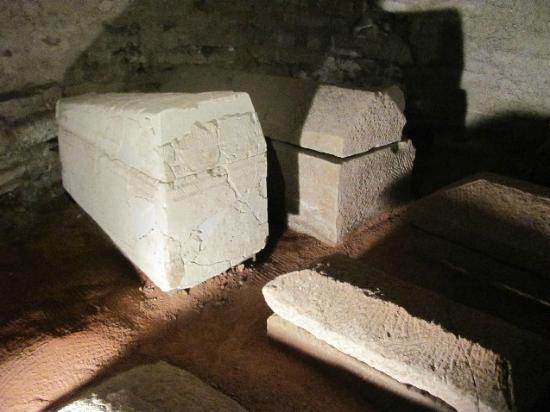
There they stood, the four sarcophagi holding my family: father, mother, brother and sister and the fifth, my own, lidless and empty. The other brother had fallen foul of the Roumanian Iron Guard and been handed over to the Germans, who burned him in Majdanek.

“Open them up then!” demanded Enver and I reluctantly went to slide over the stone covers and open the coffins inside. As I raised each coffin lid, Enver’s eyes widened as his gaze travelled from one to the other. I felt tense.

“Where are their heads?”

“I was hungry.” I replied irritably.

“You were hungry, so you ate your family’s heads?”

“No, I sold them to vampire museums.”

The problem

“What’s the next stage after Artificial Intelligence?”

Paskov looked round the room at the baffled young faces. Smithson raised his hand.

“Yes?”

“Artificial Stupidity.”

“Correct and why is that?”

“So that computers can do what we do and learn from their mistakes” Smithson replied somewhat wearily.

“But we’ve got machines that do that already,” objected Fratelli, “so they can navigate around obstacles for instance.”

“Not forgetting any of Gates’s software” muttered Evans to some general laughter. Paskov ignored this and continued. “True but to date the only heuristic available to them has been absurdly simple. They have to examine possible solutions in a straightline logical sequence. The fact that they can do those computations incredibly fast is an advantage but it’s not necessarily the best approach. So what might be?”

“Fuzzy logic.”

“We’ve had that for years.”

“But humans still have to set the parameters.”

“Do we want machines to set their own parameters?”

The class was beginning to wake up.

“What’s the one thing humans can do when a solution fails that, so far, machines can’t?” the teacher interjected. There was a pause, then Fratelli put her hand up again.

“Come up with a completely different approach.”

Paskov smiled. She was definitely showing promise.

“Yes. It’s generally called imagination. The question is then, how do we put that into machines? Any ideas?”